
Setting Expectations: The Relationship Skill Most Leaders Skip (and Pay For Later)
3 Reasons Setting Expectations Change The Experience

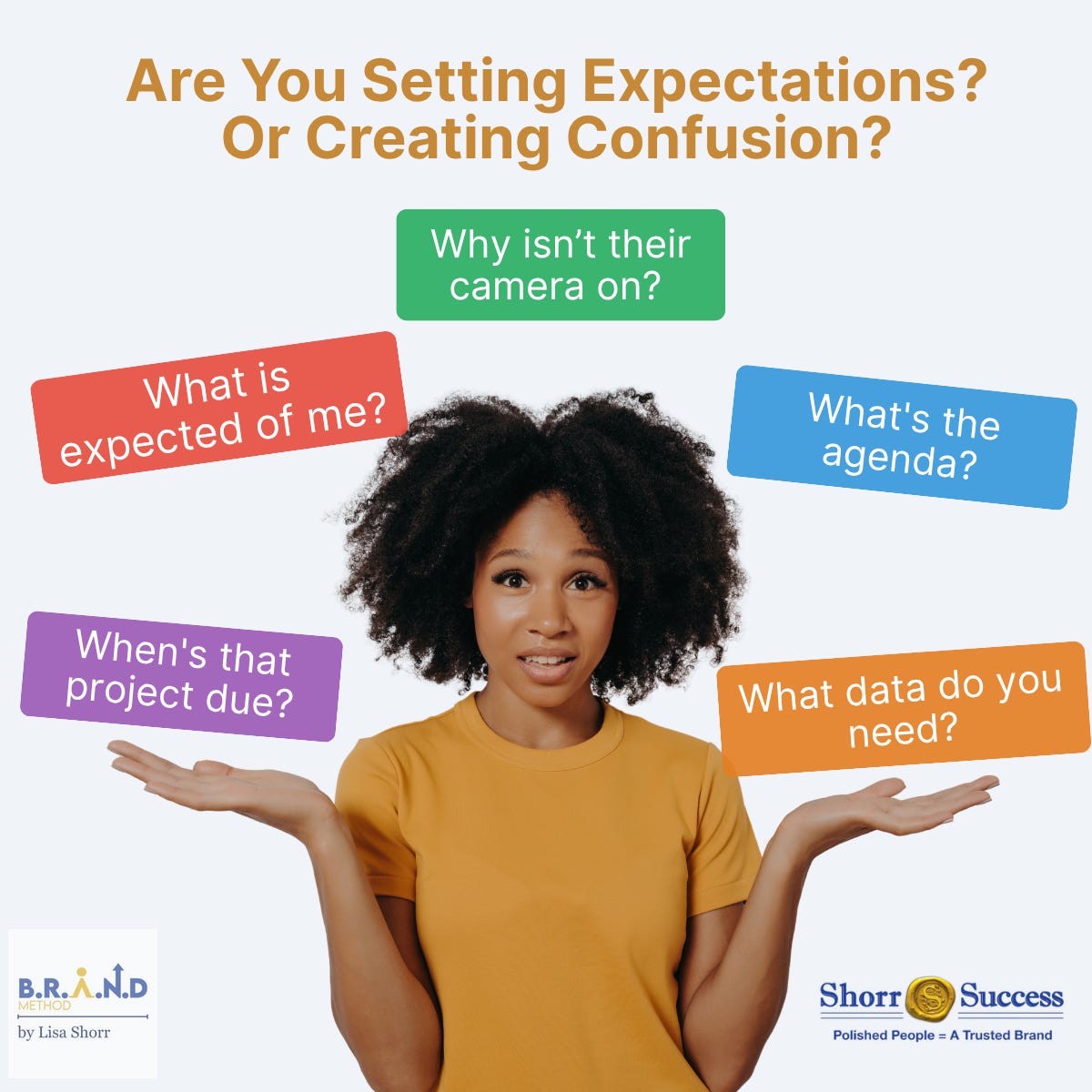
I keep hearing the same stories from small business owners, over and over again.
That project that feels like it’s dragging on forever and no one’s quite sure why. You’re waiting on a response that should have come by now. A meeting ends awkwardly because someone disappears early, cameras stay off, or no one really knows what the next step is.
And every time I hear these stories, I think the same thing: What expectations were set? If any?
Most relationship friction doesn’t come from bad intentions. It comes from assumptions. We assume someone knows the timeline. We assume they understand the process. We assume they’ll behave the way we would in the same situation.
When expectations aren’t clearly set, people start filling in the blanks on their own and those stories they tell themselves are rarely positive. That’s where frustration creeps in. And once frustration sets up camp, trust quietly starts packing its bags.
If you want stronger relationships with clients, prospects, and your team, setting expectations has to become a leadership habit, not an afterthought.
Here are three ways I see this make the biggest difference.
1. Consistent Scripts = Reassurance
I can’t tell you how many times I hear, “I don’t want my team to sound scripted.”
I understand your concern. But here’s the reality: consistency builds credibility, and confusion erodes it.
Scripts aren’t about stripping away personality. They’re about removing guesswork. How many times have you heard, “No one told me that,” “I didn’t realize that was the process,” or “I thought someone else was handling it.”
When your team uses consistent language around response times, next steps, and ownership, clients feel taken care of. Statements like, “You’ll hear from us by tomorrow,” or “After this call, here’s what will happen next,” immediately reduces anxiety and uncertainty.
People don’t need perfection. They need predictability.
When everyone communicates the same way, your business feels organized, professional, and trustworthy. And that’s exactly how strong relationships are built.
2. Meetings Flow Smoother When Expectations Are Set Right From The Start
Poorly run meetings are one of the fastest ways relationships lose momentum.
Most meetings go sideways because no one sets the tone at the beginning. There’s no clarity around why everyone’s there, how the time will be used, or what decisions are expected by the end.
Setting expectations doesn’t mean sending a long, formal agenda. It can be as simple as opening the meeting with: why you’re there, how long you’ll need, and what you want people to walk away with.
It also means being clear about participation. Are cameras expected? Is it okay to step away early? Will questions be handled throughout or at the end?
Silence creates stories. And stories create tension.
When expectations are set upfront, people relax. They feel respected. They trust the leader in the room. That trust carries far beyond the meeting itself.
3. If You Don’t Explain Your Sales Process, Clients Will Make One Up
If your sales process lives only in your head, your prospects and clients will create their own version of it and it usually sounds like this: “Why haven’t I heard from them yet?” or “I thought we’d be further along by now.”
A clearly defined sales process sets expectations around timing, decisions, and next steps. More importantly, it reassures people that there is a process.
When you confidently explain how things work, from first conversation to onboarding, you’re doing more than selling. You’re calming uncertainty. You’re showing leadership.
You’re saying, “We’ve done this before. You’re in good hands.”
That feeling of safety is what keeps people engaged and committed long before any paperwork is signed.
Setting Expectations Is a Form of Respect
Last week, I wrote about a simple question I ask at the start of many meetings:
“What do you know about me and my company?”
That question sets an expectation immediately. It signals that preparation matters. It communicates respect for the time we’re about to spend together. I hope the answer includes something, anything, that tells me the person took a few minutes to learn who I am and what I do.
Too often, the response is, “I don’t really know.”
That moment is uncomfortable, but it’s also revealing. Because expectation‑setting isn’t just about timelines, agendas, or processes. It’s about how we show people they matter. When someone shows up unprepared, whether they intend to or not, the message received is, “You weren’t worth my time.”
Setting expectations is about respecting your team’s, prospect’s, or client’s time, emotions, and energy. It’s about removing uncertainty before it turns into frustration. When expectations are clear, frustration doesn’t get a chance to grow. And when frustration is removed, trust finally has room to deepen.
So if your clients or your team seem impatient, disengaged, or irritated, don’t immediately ask, “What’s wrong with them?”
Instead, ask yourself, “What expectation did I forget to set, or model?”
That one shift changes how you lead. And more importantly, it changes how people experience working with you.
I’m Here To Help Coach You and Your Team
This is the work I do with small business owners every day.
If you’re realizing that unclear expectations are costing you time, energy, and trust, with clients or within your team, I’d love to help. My corporate coaching focuses on helping leaders communicate with clarity, confidence, and consistency so relationships stop feeling hard.
You can learn more about my Corporate Coaching & Consulting here:
👉 https://shorrsuccess.com/corporate-coaching-consulting/
If this article felt uncomfortably familiar, that’s usually a sign it’s time to stop “winging it” and start leading with intention.
And you don’t have to do that alone.
Lisa Shorr is a Certified Image Consultant, Business Communication Coach, Co-Owner of a thriving MSP, and best-selling, award-winning author of Your B.R.A.N.D. Unleashed: 9 Proven Strategies That Build Trust and Maintain Lasting Client Loyalty. With over two decades in the IT industry, Lisa specializes in helping MSP and small business owners and leaders develop their executive presence, improve client retention, and become trusted authorities in their field. Through her proven B.R.A.N.D. Method and high-impact coaching programs, Lisa transforms technical teams into confident, client-focused professionals who lead with clarity, connection, and confidence. Visit ShorrSucess.com to learn more.